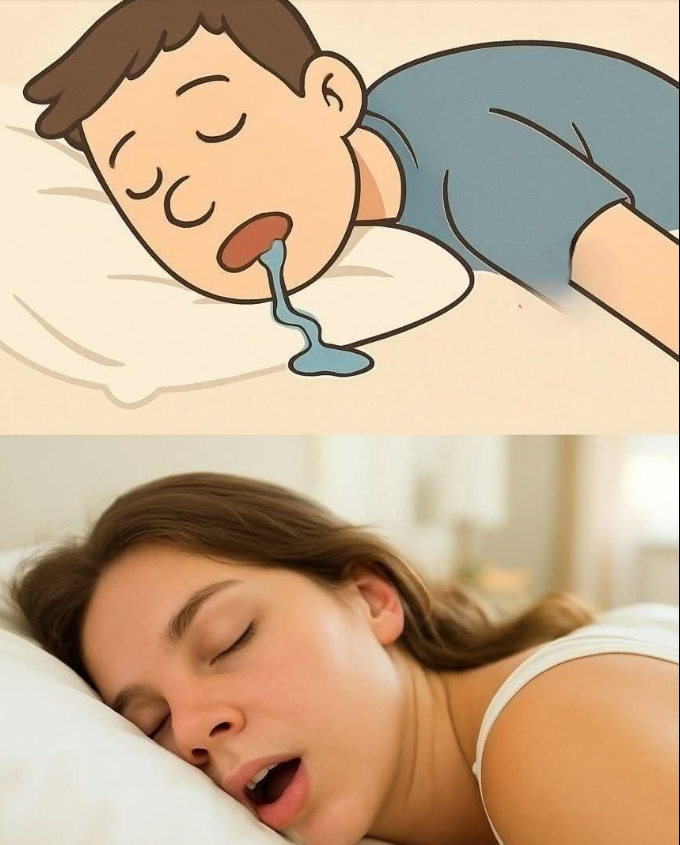
- Embarrassment or humor: In many cultures, drooling in your sleep is seen as mildly embarrassing or comedic — often joked about in sitcoms or cartoons.
Symbol of deep sleep: In some places, drooling is interpreted as a sign of a good night’s rest or that someone reached a very deep, relaxed sleep stage.
Politeness norms: In more conservative or formal cultures, any form of bodily fluid or “lack of control” is seen as inappropriate — making drooling more taboo, especially in public or shared spaces.
- Evolutionary Angle
see continuation on next page -
Primal instincts: Saliva production is a survival trait — it protects your teeth, aids digestion, and signals readiness to eat. Drooling might be an overflow mechanism in a deeply relaxed (safe) state, suggesting that the body doesn’t feel threatened.
Animal behavior: Many animals drool when asleep, hungry, or relaxed. Humans likely retained this as a side effect of muscular relaxation during