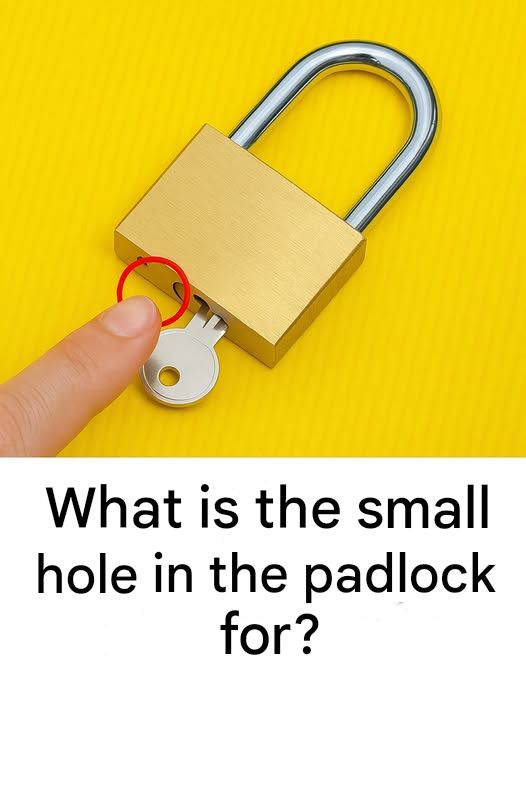
If you’ve ever noticed a small hole in the bottom of a padlock, next to the lock, you’ve probably wondered what it’s for. Like many, you may have thought that its function is to help open the lock in case you lose the key. However, this is a common misconception! A locksmith explained to me its true usefulness, and the answer surprised me.
The Function of the Hole in the Lock: Avoiding Problems and Ensuring Durability
1. Lubrication of the Lock
This small hole has an essential function: it allows the lubrication of the internal mechanism of the padlock. Thanks to this hole, it is possible to apply a lubricant, such as WD-40, directly to the lock. By simply placing the applicator in the hole and pressing, the lubricant penetrates the mechanism, preventing oxidation and ensuring smooth operation for a long time.
By keeping the lock well lubricated, we avoid having to force the key to open the lock and prevent premature wear of the internal parts.
2. Water Evacuation
Another key function of this hole is to allow water to drain from inside the lock. Outdoor locks are often exposed to rain and moisture. Without this drainage hole, water could accumulate inside, accelerating oxidation and deterioration of the mechanism. This small hole allows water to drain away, preventing rust from forming and protecting the functionality of the padlock.
3. Prevent frostbite in winter
In cold weather, water pooling inside the lock can freeze and cause serious problems. During the winter, it is possible for the water trapped in the mechanism to freeze, which could block the lock or even break it. Thanks to the small hole, water is not trapped inside and prevents the possibility of freezing, protecting the lock even in extreme weather conditions.
This hole, although small, plays an essential role in the protection and maintenance of the lock, especially if it is used outdoors. If you have a brass or steel padlock, it is advisable to reserve its use for indoor use if it does not have a drainage system, thus avoiding accelerated wear and tear.