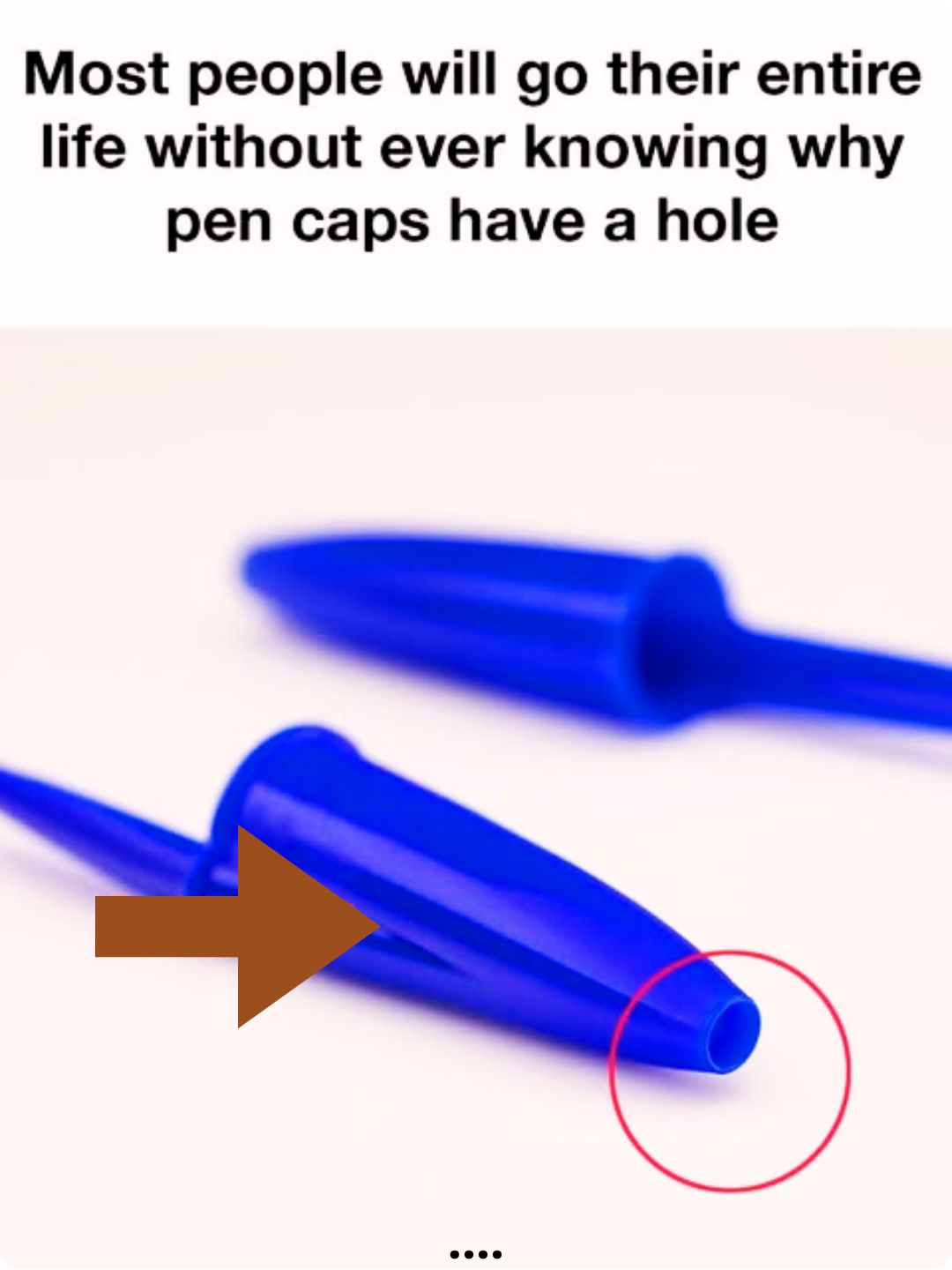
You’ve used them countless times — writing notes, signing documents, doodling during meetings. But have you ever stopped to look closely at the cap of a pen ? Specifically, that tiny hole at the top?
The World’s Most Sought-After Lost Treasures
It’s so small, so subtle, most of us have never given it a second thought. Yet, this unassuming feature is the result of brilliant engineering, safety innovation, and thoughtful design . Far from being decorative or accidental, the hole in pen caps serves several vital purposes — some of which could even save a life .
Let’s uncover the surprising story behind this everyday mystery.
The History and Evolution of Pen Caps
Pen caps weren’t always a thing. In the days of quills and dip pens , there was no need to cap the nib — you simply cleaned and stored them separately. But with the rise of fountain pens in the 19th century, and later ballpoint and gel pens , the need for a protective cover became essential.
Caps were initially designed to:
Prevent ink from drying out
Protect the delicate writing tip
Keep pockets and bags clean
As pens became mass-produced and widely used — especially in schools and offices — manufacturers began refining their design. One of the most important innovations? The little hole at the top.
Why Is There a Hole in Pen Caps? 4 Key Reasons
1. Safety First: Preventing Choking and Suffocation
This is the most critical reason — and one that has saved lives.
Children (and even adults) often chew on pen caps absentmindedly. If a cap is accidentally inhaled or swallowed , it can become lodged in the airway, blocking airflow and leading to asphyxiation .
But here’s the lifesaving twist: The hole allows air to pass through , even if the cap is stuck in the throat. This small opening can provide just enough airflow to prevent suffocation, giving precious time for medical help to arrive.