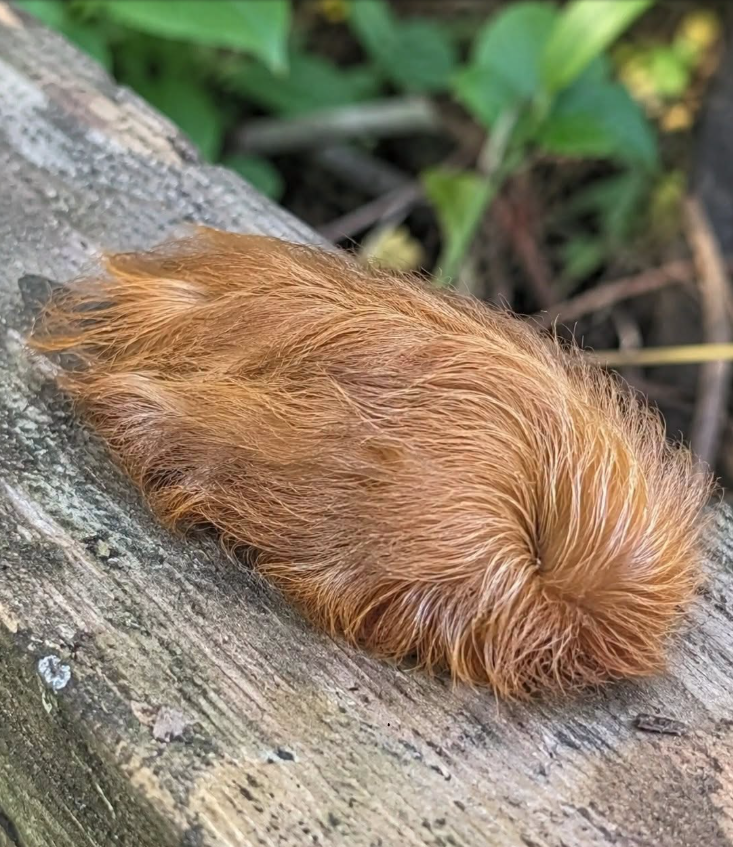
its exact coloring can vary.
Look for:
A short, thick, somewhat teardrop-shaped body
A dense covering of long, silky hairs
Gray, tan, brown, or golden coloring
A furry appearance that can hide the body underneath
A generally small size
A tapered or tufted appearance toward one end
They can be found on trees and shrubs because the larvae feed on vegetation. NC State Extension lists plants such as elm, hackberry, maple, oak, and sycamore among their host plants.
But here’s the important part:
Appearance alone isn’t enough to safely identify