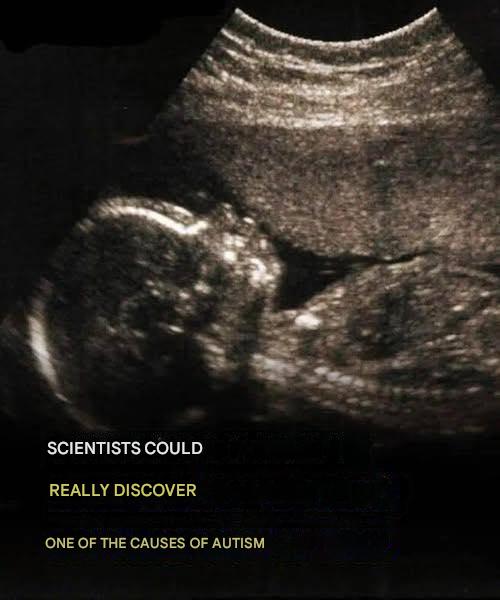
Research indicates that our mother's microbiome has a greater influence on the development of autism than our own.
“The microbiome can influence brain development in many ways,” said John Lukens, principal investigator and PhD candidate at the University of Virginia School of Medicine, in a statement.
"The microbiome plays a crucial role in calibrating the offspring's immune response to infection, trauma, or stress."
A key piece of this puzzle could be a molecule produced by the immune system called interleukin-17a (IL-17a). This molecule is known to play a role in diseases such as psoriasis, multiple sclerosis, and rheumatoid arthritis, and it also helps fight fungal infections. However, it also appears to influence brain development even before birth.
To investigate this, the researchers used mice with different types of gut bacteria. One group had bacteria that triggered a strong IL-17a-mediated immune response, while the other did not.
When researchers blocked IL-17a in young mice, both groups behaved normally. However, after the treatment ended and the mice grew naturally, the first group began to develop symptoms associated with autism, such as repetitive behavior.
The researchers collected feces from the first group and transferred them to the second group via fecal transplantation, which transferred gut bacteria that cause inflammation. As expected, the second group of mice also began to exhibit behaviors typical of autism.
Although the researchers conducted the study only in mice, it lays the groundwork for future research that could determine the extent to which maternal gut health contributes to the development of neurodevelopmental disorders.
"As for applying our research to humans, I think the next important step will be to identify the microbiome characteristics in pregnant women that correlate with autism risk," Lukens said. "I think the most important thing is to determine what factors can be used to modulate the maternal microbiome in the most effective and safe way possible."
While blocking IL-17a could also offer a way to prevent autism, Lukens pointed out that it carries certain risks. "If you think about pregnancy, the body is essentially absorbing foreign tissue, which is the baby," she explained. "So, maintaining the health of the embryo requires a complex balance of immune system regulation, which is why people generally avoid manipulating the immune system during pregnancy."
He suggested that there are many other molecules that could be studied, since IL-17a is only a small part of a much larger picture.
It was even found that food products were contaminated.
The recipe is verified on the website.